LED Wall Rental Guide: Real Costs, Quality Checks & Rent-vs-Buy Math
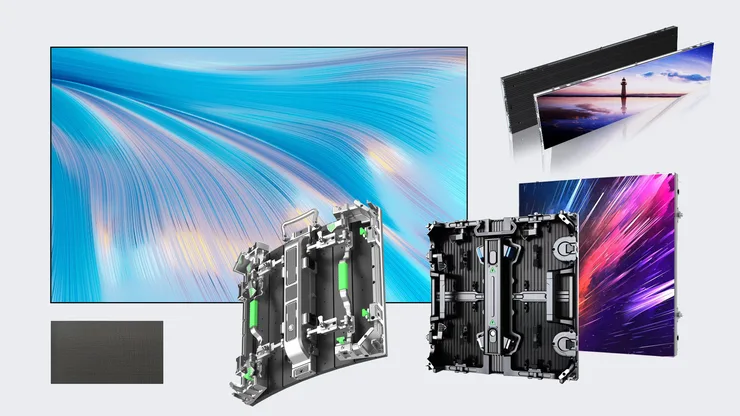
1. What you're actually paying for
Most rental quotes look simple. A daily rate. Done.
They're not simple. Here's what's inside that number.
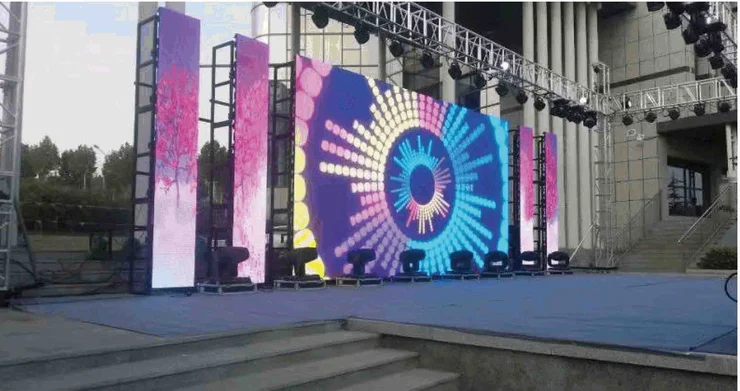
The panel depreciation you're funding
That 10'×6' wall you're renting at $1,200/day? The rental company bought it for roughly $28,000. Every event puts wear on the modules. SMD LEDs degrade — after 50,000 hours they're at half brightness, but the useful event life is much shorter. The panels in rotation have probably done 40 events already.
You're paying for that depreciation. Fair enough — that's the business model. But know what you're funding.
The processor nobody mentions
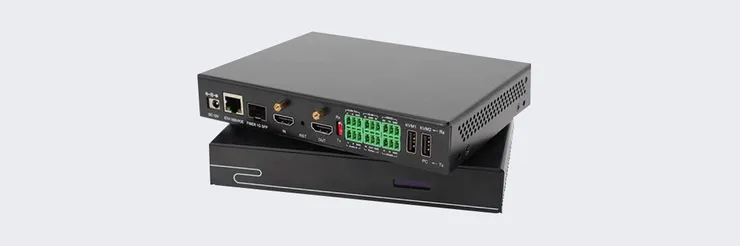
Behind every LED wall is a video processor — a $2,000–$8,000 piece of hardware that takes your laptop signal and maps it across 40 individual panels at the correct resolution and color temperature. Without it, you don't have a wall. You have 40 displays showing the same thing. Badly.
A proper rental includes a Novastar or Brompton processor. If they hand you a generic scaler with no brand name, the latency will show on camera and the colors won't match between panels. You'll see it. Everyone will see it.
The rigger you never meet
LED panels weigh 7–10 kg each. A 20'×12' wall: 400 kg. Someone has to hang that, level it within 2mm tolerance, cable it, and make sure it doesn't fall on your keynote speaker. That someone carries liability insurance that costs more per year than the panels.
Their premium is baked into your rental fee. Good. You want it to be.
Real pricing (US market, mid-2026)
| Configuration | Pixel Pitch | Daily Rate |
|---|---|---|
| 10' × 6' indoor | 2.6mm | $800–$1,200 |
| 15' × 10' indoor | 2.6mm | $1,500–$2,200 |
| 20' × 12' indoor | 1.9mm | $2,500–$3,500 |
| 10' × 6' outdoor | 3.9mm | $1,000–$1,500 |
| 20' × 15' stage backdrop | 3.9mm | $2,000–$3,000 |
Technician: $500–$800/day extra. Content creation: not included. If you show up with the same JPEG you used on the projector last year, it'll look like a mosaic at 3840×2160. Our LED display resources cover what resolution you actually need based on viewing distance — useful even if you're renting.
2. Rent vs buy: the math rental companies skip
Our opinion, backed by real numbers: If you run more than 3 events per year, renting is a bad financial decision. A 10'×6' wall costs roughly $22,000 to buy — get pricing from a direct manufacturer and you cut out the distributor markup. Four rentals a year at $1,200/day = $4,800. Payback in under 5 years. The wall lasts 8–10. After year 5, every event is profit.
A customer of ours — event production company, 12 shows a year, mostly trade show booths in Las Vegas and Orlando — called us last March. They'd been renting a 20'×12' wall seven times a year for $4,500 per event including the tech. That's $31,500. In one year.
The wall they were renting was worth about $35,000 to buy. They'd paid for it in 14 months — and owned nothing.
We sold them the wall. It's done 7 events since. No daily rate. Just a tech fee. The panels still calibrate to 98% uniformity. The way we build these panels — factory-direct calibration, modular design — means they hold uniformity far longer than the rental industry average.
Rent if: 1–3 events a year, different sizes each time, no storage space, you need the absolute latest pixel pitch (sub-1.5mm changes every 18 months).
Buy if: 4+ events a year, same general size, you've got a storage cage, and you're fine with 2.6mm pitch for 4–5 years. After year 5, you can resell the panels at about 35% of purchase price. Rental companies do this. So can you.
3. Pixel pitch is the only spec that matters
Forget brightness. Forget refresh rate. Forget contrast ratio. Those all matter, but they matter second.
Pixel pitch determines whether your audience sees a screen or a screen door. It's the distance in millimeters between the center of one LED pixel and the next. The rule: take your closest viewer distance in feet, divide by 10. That's your maximum pitch in millimeters. The AVIXA display image size standard formalizes this math — their DISCAS standard maps viewing distance to minimum resolution requirements for digital signage.
| Viewing Distance | Minimum Pixel Pitch | Typical Use |
|---|---|---|
| 5 feet | 0.9–1.5mm | Trade show booth, retail |
| 10 feet | 1.5–2.6mm | Conference stage, lobby |
| 20 feet | 2.6–3.9mm | Ballroom, concert venue |
| 50 feet | 3.9–5.9mm | Outdoor stage, stadium |
| 100+ feet | 6mm+ | Billboard replacement |
If a rental company offers you a 3.9mm wall for a booth where people stand 5 feet away, they're either incompetent or hoping you won't notice the pixel grid. You will. Your booth visitors will. It looks like watching TV through a screen door.
4. How to quality-check a rental wall in 10 minutes
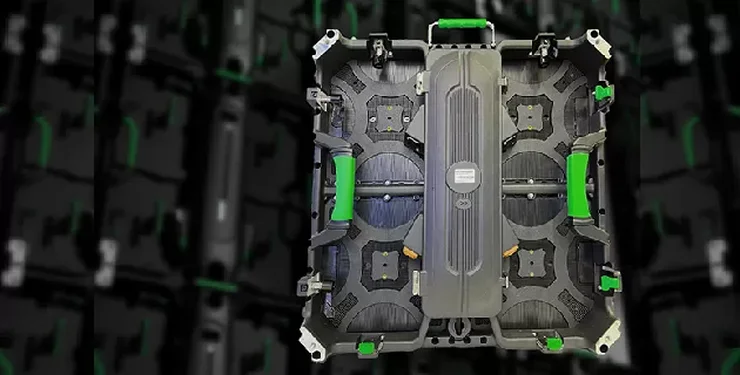
Nine out of ten issues with rental walls come down to three things: dead pixels, color drift, and low refresh rate. Check these before the event, not during soundcheck when 400 people are about to walk in. Need a full setup walkthrough? Visit iSEMC's blog for installation guides and tips.
Dead pixel check — 2 minutes. Display a pure white test pattern. Walk the wall at 3 feet. Every black dot is a dead pixel. Acceptable: under 5 per square meter. Unacceptable: clusters of 3+. If you see a cluster, the panel's been dropped. Demand a replacement panel.
Color uniformity — 3 minutes. Display pure red, then green, then blue, then white. Stand back 15 feet. Every panel should look identical. If panel 4 looks pinker than panel 5 on the white test, the calibration is off. Your event photographer will notice. So will the livestream.
Refresh rate — 30 seconds. Point your phone camera at the wall. If you see horizontal dark bands rolling across the screen, the refresh rate is below 3,840Hz. Broadcast cameras will capture flicker above 1,920Hz. Demand 3,840Hz or higher for any filmed event. The AVIXA performance standards for LED displays specify minimum refresh rate thresholds for professional video environments.
Gap check — 1 minute. Run your fingernail along the seams between panels. A 0.2mm gap is fine. A 1mm gap will show as a dark grid from 20 feet. Also check panel flatness — if one panel protrudes, it'll cast a shadow line visible from any angle.
5. Indoor vs outdoor: don't mix them up
Indoor panels: 1,000–1,500 nits brightness. Outdoor panels: 5,000+ nits. The brightness difference is not subtle. An indoor panel used outdoors at noon looks like a grey rectangle.
More importantly: outdoor panels are weather-sealed (IP65 front, IP54 rear). Indoor panels are not. One rain shower and you've bought them — the rental company's insurance won't cover negligence.
Outdoor panels are heavier (more aluminum in the frame for heat dissipation), more expensive to rent (25–40% premium), and require more rigging. Don't spec outdoor if you're in a ballroom. Don't spec indoor if there's a chance of weather. If you're comparing specs across manufacturers, check iSEMC's pricing page for indoor and outdoor panel cost comparisons.
(Yes, we've seen someone try. No, it didn't end well. The panels arced. The event moved to the lobby.)
6. Three questions that make rental salespeople squirm
"What's the panel manufacturer and model number?"
If they can't answer, or say "generic," walk. Generic panels have no spare parts pipeline and inconsistent color temperature between batches. Acceptable answers: panels from iSEMC, Absen, Unilumin, Roe, Infiled — with a model number you can look up.
"When was your last full calibration?"
Factory calibration drifts after 6–12 months of rental abuse. A professional house recalibrates every 6 months or 30 rentals. If they hesitate, the answer is "never." Your wall will have visible color banding between panels.
"Show me a photo from last weekend's event."
Not the website photo. Not the brochure. A real photo with a timestamp. If they can't produce one, they haven't had a booking — which means panels sitting in cases, unmaintained, for who knows how long.
7. FAQ
$800–$3,500 per day depending on size, resolution, and location. Add $500–$800 for a technician. Total for a mid-size event: $2,000–$5,000 all-in.
Figure out your closest viewer distance. Divide feet by 10 to get maximum pixel pitch in mm. Then work backward from your content resolution. A 10'×6' wall at 2.6mm gives you a 936×540 effective resolution — fine for graphics, not for small text.
Rent if 1–3 events/year. Buy if 4+. A 10'×6' indoor wall costs $18,000–$25,000 to buy. At $1,200/day rental, it pays for itself in 15–20 rental days — or about 5 events.
Outdoor: 5,000+ nits, IP65 weather-sealed, heavier, 25–40% more expensive. Indoor: 1,000–1,500 nits, no weather sealing, lighter. Never use indoor panels outdoors.
Yes. A 10'×6' wall needs 2–4 hours of setup by someone who knows processor config, color calibration, and safety rigging. Most rental contracts require a certified tech onsite.
2–4 weeks for standard configs. 6–8 weeks for large custom builds. Last-minute (under 72 hours): expect a 20–30% rush fee. Holiday weekends book out 2–3 months in advance.
Same thing. "Hire" is UK/Australia/Asia terminology. "Rental" is North America. UK hire quotes typically include the tech. US rental quotes usually don't. Ask.
iSEMC Pricing — LED Wall Rental & Purchase Options
iSEMC Blog — LED Display Guides & Tips
About iSEMC — LED Manufacturer
Contact iSEMC — Get a Custom Quote
Need an LED wall? Don't guess the specs.
We'll tell you exactly what pixel pitch, processor, and panel count you need — even if you end up renting from someone else. We manufacture the panels. The specs are free.
Get a spec sheet →iSEMC — LED display manufacturer. Factory-direct panels for rental, fixed installation, and custom builds. Contact us · About
www.isemc.com | Shenzhen, China | Pricing